Guide
Why use a visual schedule at home, and where to start
Updated October 12, 20265 min read
A visual schedule is not there to make a child obey. It answers a question children ask a hundred times a day without always being able to put it into words: "what is happening now, and what comes next?". When the answer is on display, the child checks it instead of asking, and the adult stops repeating it. That is all, and it is a lot.
What a visual schedule changes, concretely
For the child, the day becomes predictable. They know what is coming, how many things are left to do, and when the moment they are waiting for arrives. Transitions, those moves from one activity to the next that trigger so many conflicts, announce themselves: the child sees that the bath comes after play, and has had time to get ready for it.
For parents, the schedule moves the instruction. It is no longer the adult's voice saying "homework now", it is the support. The relationship gains from it: the adult is no longer the one who interrupts, they become the one who accompanies. And a child who argues is arguing with a sheet of paper, not a person.
The signs that a child needs one
- The same questions come back every day: "when is snack time?", "where are we going?", "how many left?".
- Every end of activity turns into a conflict, especially when the activity is enjoyable: screen, play, park.
- The child starts a routine well then stops halfway, without anyone knowing why.
- Mornings and evenings require continuous adult presence, instruction after instruction.
- Unexpected events, even small ones, trigger a disproportionate reaction.
Three formats, depending on the child and the moment
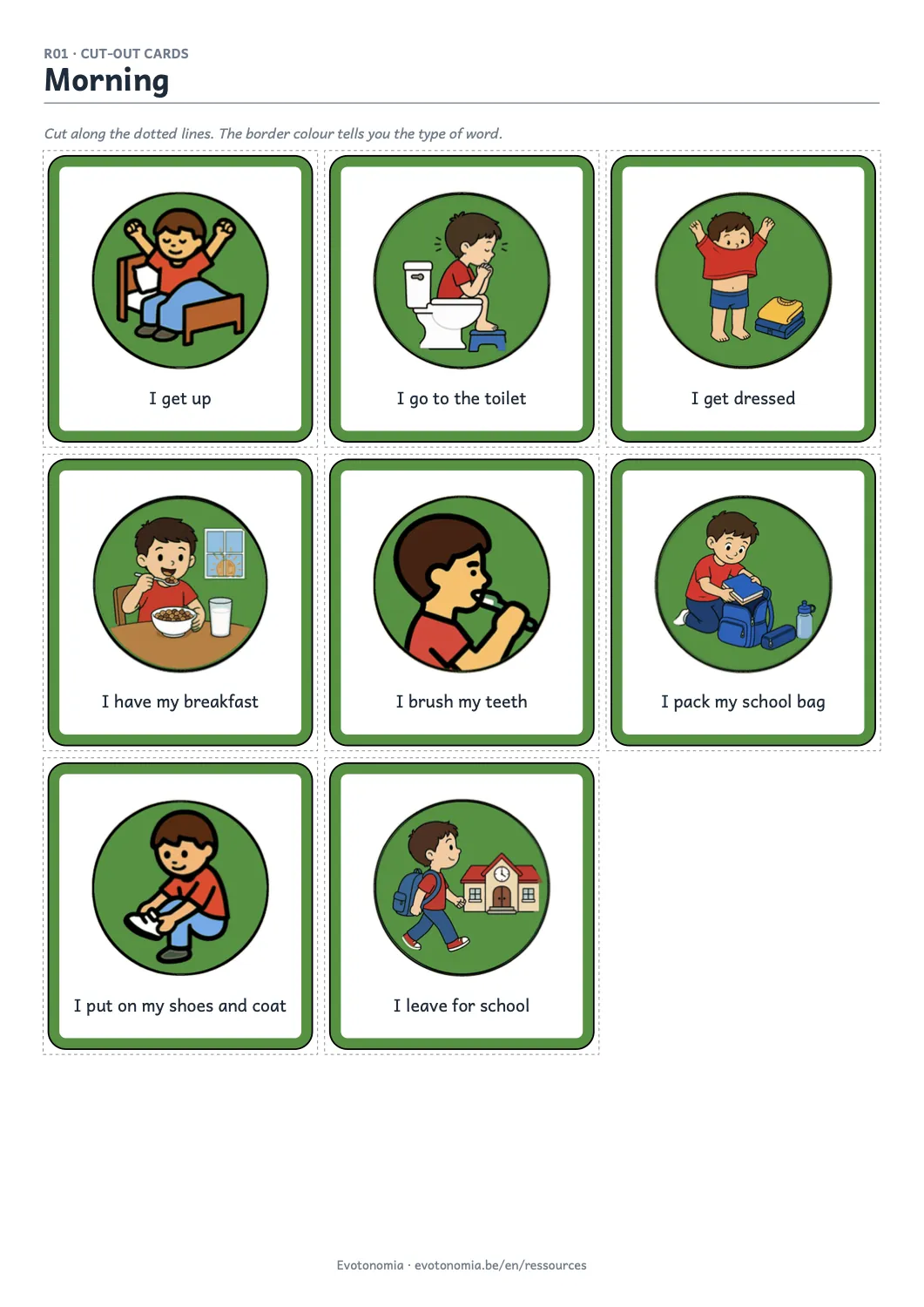
The sequence of one routine
A horizontal strip showing the steps of a single routine, morning or bedtime. It is the format to start with: short, concrete, displayed where it happens.
The daily schedule
A column that strings together the main moments, from waking up to bedtime. It suits children who mainly need to know what comes next, and to see the awaited moment getting closer.
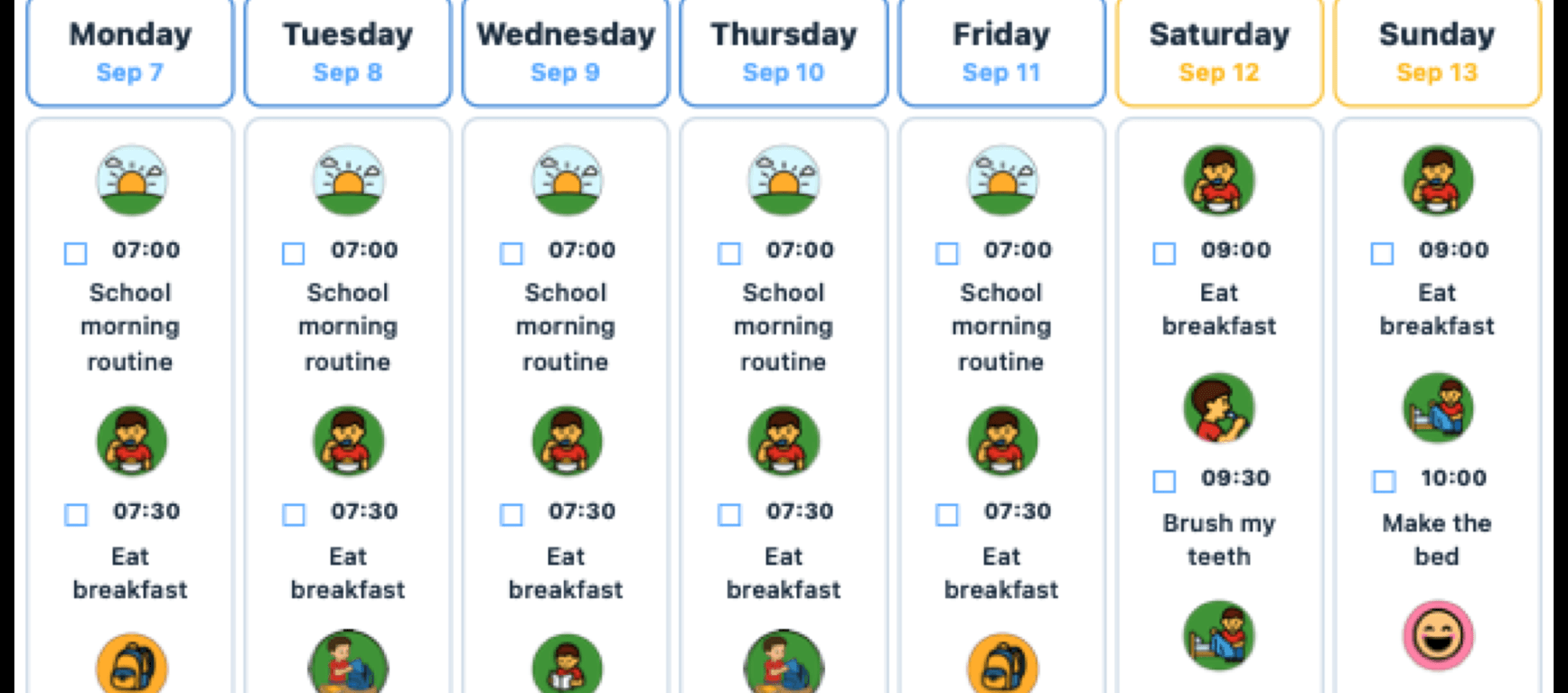
The weekly schedule
Seven columns, one per day, to place school, activities, days at one parent's or the other's. It serves older children and families whose rhythm changes from one day to the next.
Where to start, in one week
Day 1: pick a single moment
The one that costs the most today, usually the morning or bedtime. Not the whole day: an over-ambitious schedule is abandoned before it has been of any use.
Day 2: break it down with the child
Five to eight steps, named with a verb, chosen together. A child who took part in the breakdown recognises their schedule; one who has it imposed puts up with it.
Day 3: display at child height
Where the routine happens, in their field of vision, with nothing else around. A printed sheet taped to the door beats a beautiful display in the hallway.
Days 4 to 7: point, then stay quiet
The first few days, the adult points to the next step on the support. Then they wait for the child to look on their own. The spoken instruction fades in favour of the gesture, then the gesture fades too.
The mistakes that make a schedule fail
- The punitive schedule: a support that only shows what has not been done. It must first show what has been achieved.
- The frozen schedule: a routine that never changes while the child has grown. Remove the steps that are mastered, detail new ones.
- The silent schedule: displayed but never looked at with the child. For the first weeks, look at it together, morning and evening.
- The perfect schedule: too many pictures, too many colours, too much information. A child spots one piece of information, not fifteen.