Guide
Bedtime routine: preparing for sleep, not just for bed
Updated August 25, 20264 min read
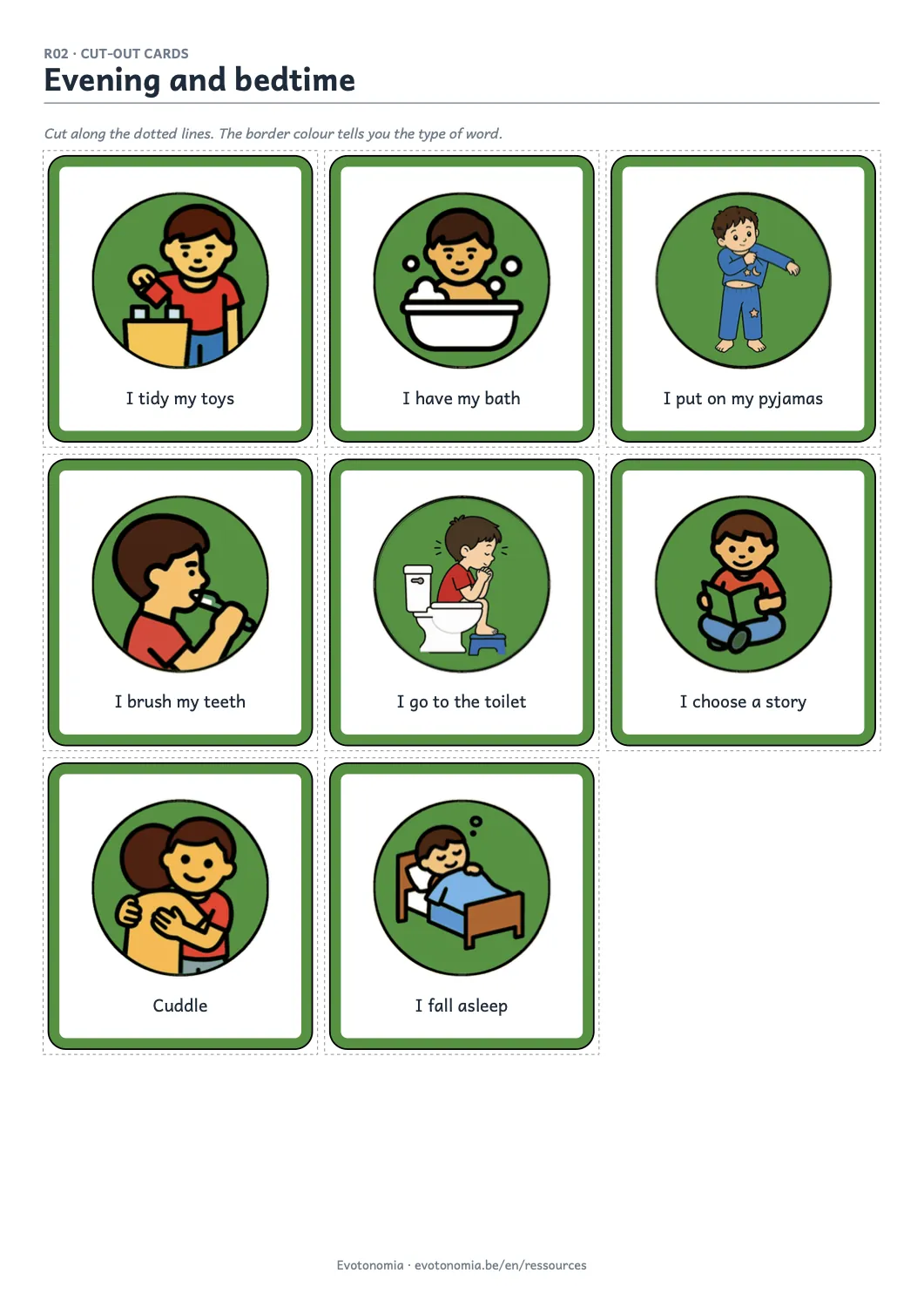
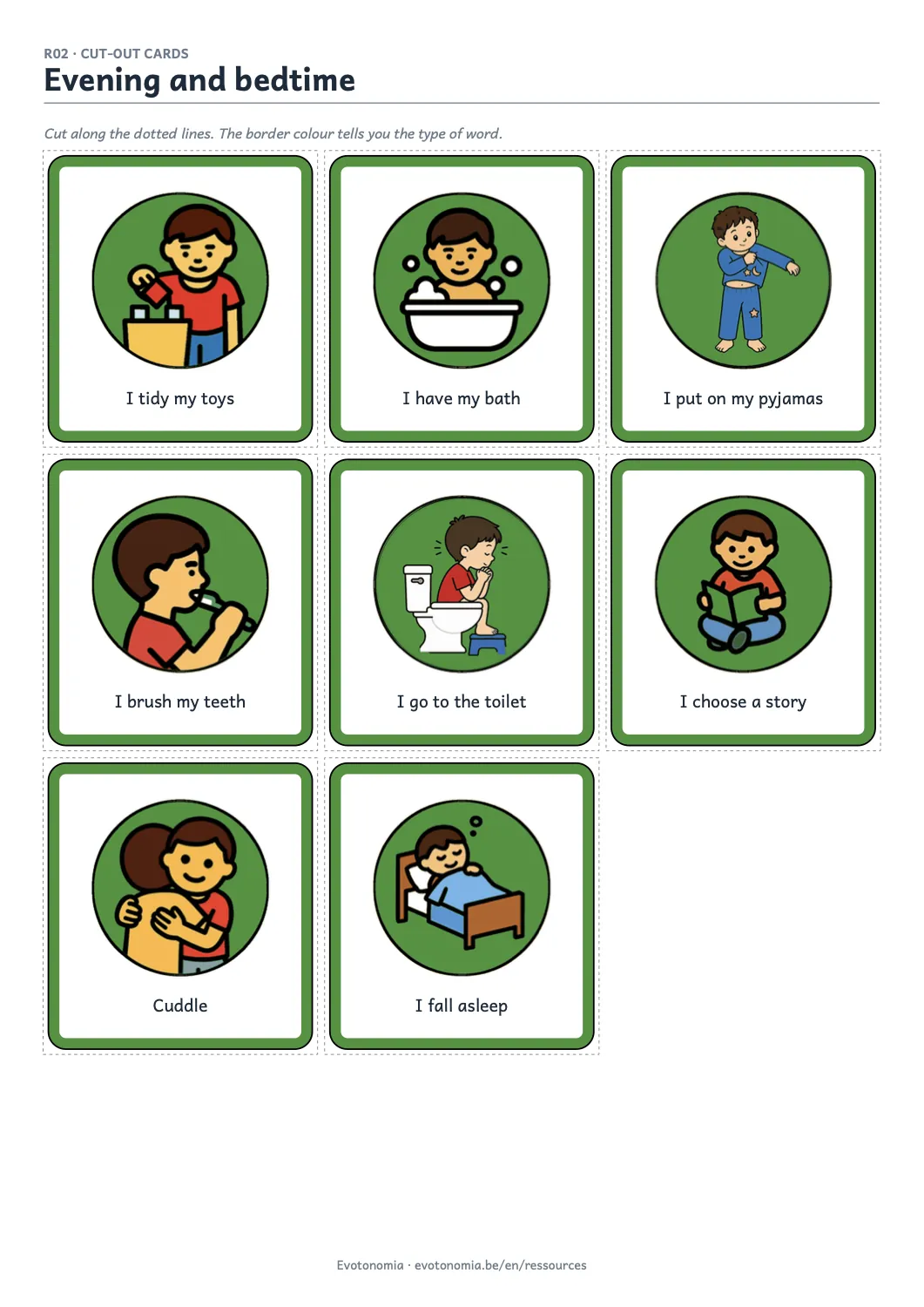
An effective bedtime routine starts well before bed. It chains increasingly calm steps, always in the same order, so the body recognises the signal. The visual support mainly makes the end predictable: the child sees how many steps stand between them and bed, which defuses much of the negotiating.
Evenings are won on the wind-down, not on the clock
Setting a bedtime is not enough if the half hour before it stays stimulating. What prepares sleep is a slope: activities that engage less and less, lights that go lower and lower, interactions that get calmer. A visual routine makes that slope legible to the child, who otherwise experiences it without understanding it.
It also explains why the hard part is almost never bed itself, but the transition before it: stopping what you were doing. That is where the effort and the cues belong.
Switching screens off deserves its own image
Stopping a screen is harder than stopping a construction set, because a screen never ends by itself. There is no natural end, so the stop always comes from outside, and it is always experienced as an interruption.
- Announce the end before it arrives, with a visible cue rather than an abstract duration.
- Give the stop its own step in the routine, with its own image, so it is not a surprise.
- Plan the next step immediately: a stop that leads to nothing gets negotiated, a stop that leads to the next step flows on.
- Keep the same order every evening, including at weekends where possible.
Should the order of steps be enforced
It depends what you are after. A strict order reassures children who need predictability, and it avoids trips back and forth between bathroom and bedroom. A free order leaves room to choose, which helps children who dig in when everything is decided for them.
In the app this is set mission by mission, with the “Strict order” toggle. On paper the equivalent is numbering the steps or leaving them unnumbered. Nothing stops you starting strict and opening up once the sequence is established.
Tracking without supervising
A weekly tracking chart is less about checking on the child than about giving you facts. After a week you can see whether the sticking point is always the same, whether it moves, or whether it only exists on certain evenings. That is far more useful than a general impression.
Tick with the child, never instead of them
The value of the chart lies in the act of ticking. Done by the adult at the end of the evening, it turns back into an assessment.
Look at the week, not the day
One bad evening says nothing. Five evenings stuck on the same step say the step is badly calibrated.
Change one thing at a time
Changing the order, the breakdown and the timing on the same evening makes it impossible to know what produced the effect.