Guide
Emotion thermometer: naming it before it overflows
Updated August 25, 20264 min read
An emotion thermometer gives a child a scale to locate what they feel before it is too late to act. The goal is not to avoid strong emotions, it is to spot the rise early enough to choose a strategy. The cards are worked on when things are calm, never during a meltdown.
Why a scale rather than a question
“How are you feeling?” asks the child to find a word, pick it out from others and say it, at the exact moment their resources are engaged elsewhere. A visual scale asks far less: point to a level. Pointing is available long before naming is.
The scale also introduces degree. Between “I'm fine” and “I'm angry” there is a territory where action is still possible. That territory is exactly what the thermometer makes visible.
Setting up the thermometer in four moves
Name the levels with the child
Their words beat yours. “It's boiling” works better than “irritability”, because they are the one who will recognise it.
Identify the signs of each level
What happens in the body, before words: fists, a rising voice, the urge to leave. Those signs are what will raise the alarm, not awareness of the emotion.
Attach one strategy to each level
Just one per level at first. Drinking water, leaving the room, pressing against a wall, breathing with a support. One strategy that works beats five theoretical ones.
Revisit it together when all is well
On a Monday, or in the evening, for a few seconds. That regular revisiting is what makes the support available when it matters.
Emotion cards and strategy cards, two uses
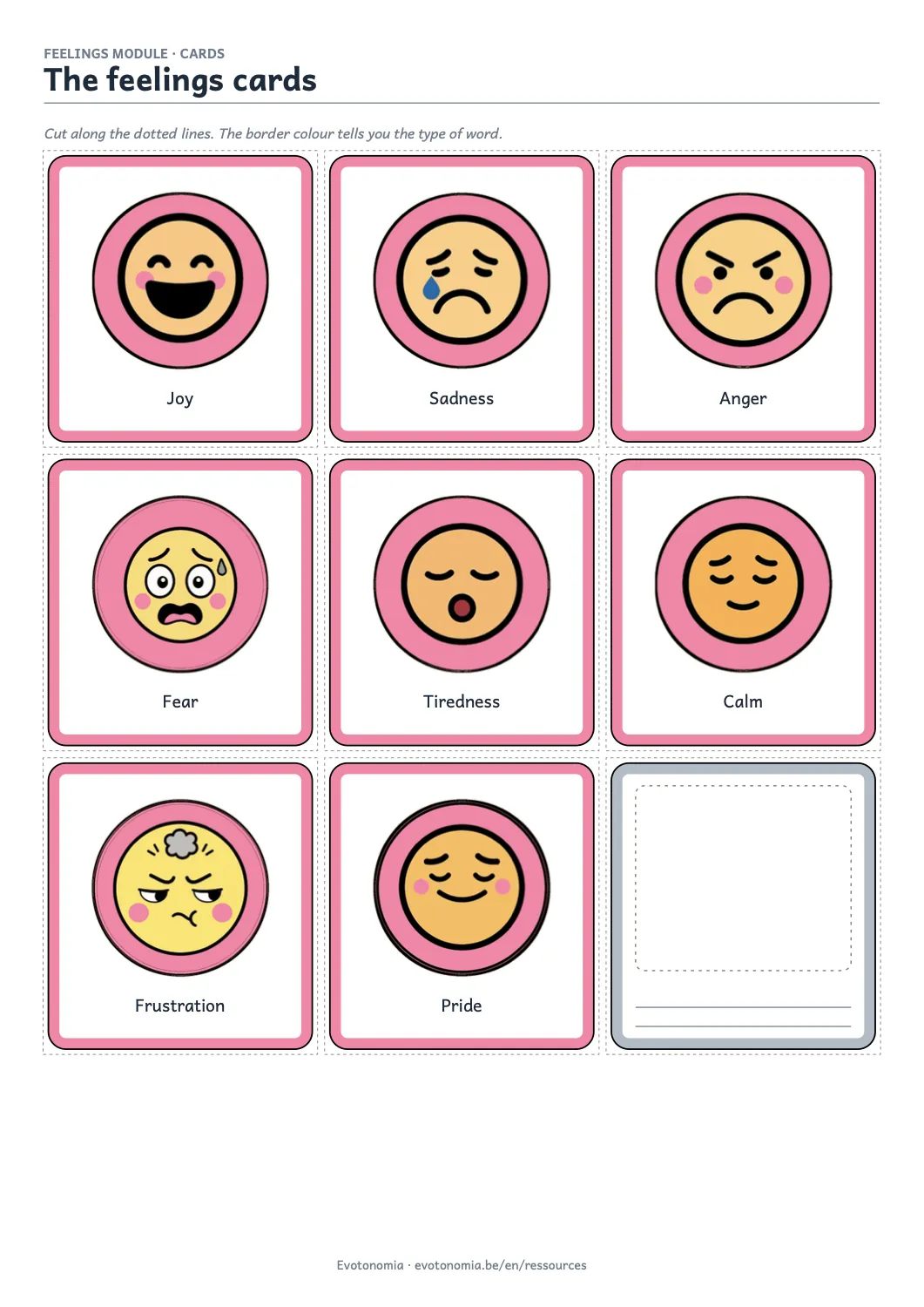
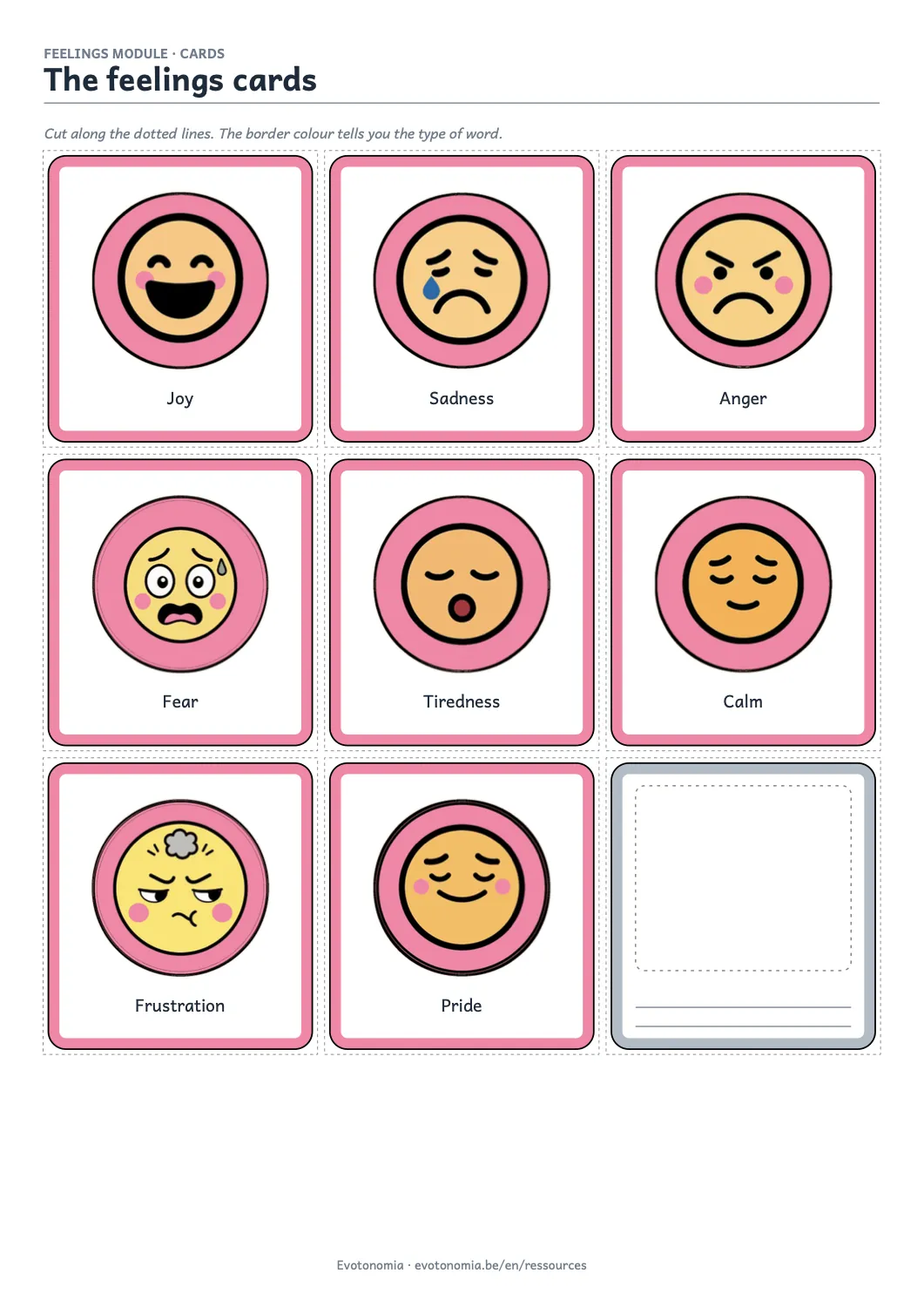
Emotion cards are for identifying: the child points to the one that matches. Strategy cards are for acting: they offer what can be done now. Mixing them in one pile blurs both functions, so keep them physically separate.
- Keep strategy cards within reach where tension rises, not filed away in another room.
- Let the child discard the strategies that do not suit them. An imposed card will not get used.
- Add blank cards for their own solutions, often more effective than the ones you suggest.
- Accept that some cards are never used. That is a sign they have found their own.
Tracking the week without turning it into an assessment
A weekly emotion tracker is not there to measure progress. It is there to spot patterns: a time of day, a weekday, a recurring context. Such patterns are often invisible day to day and quite clear across seven days.
The tracker is also a useful basis for conversation with a professional working with the child. A week laid out says more than a story reconstructed after the fact.